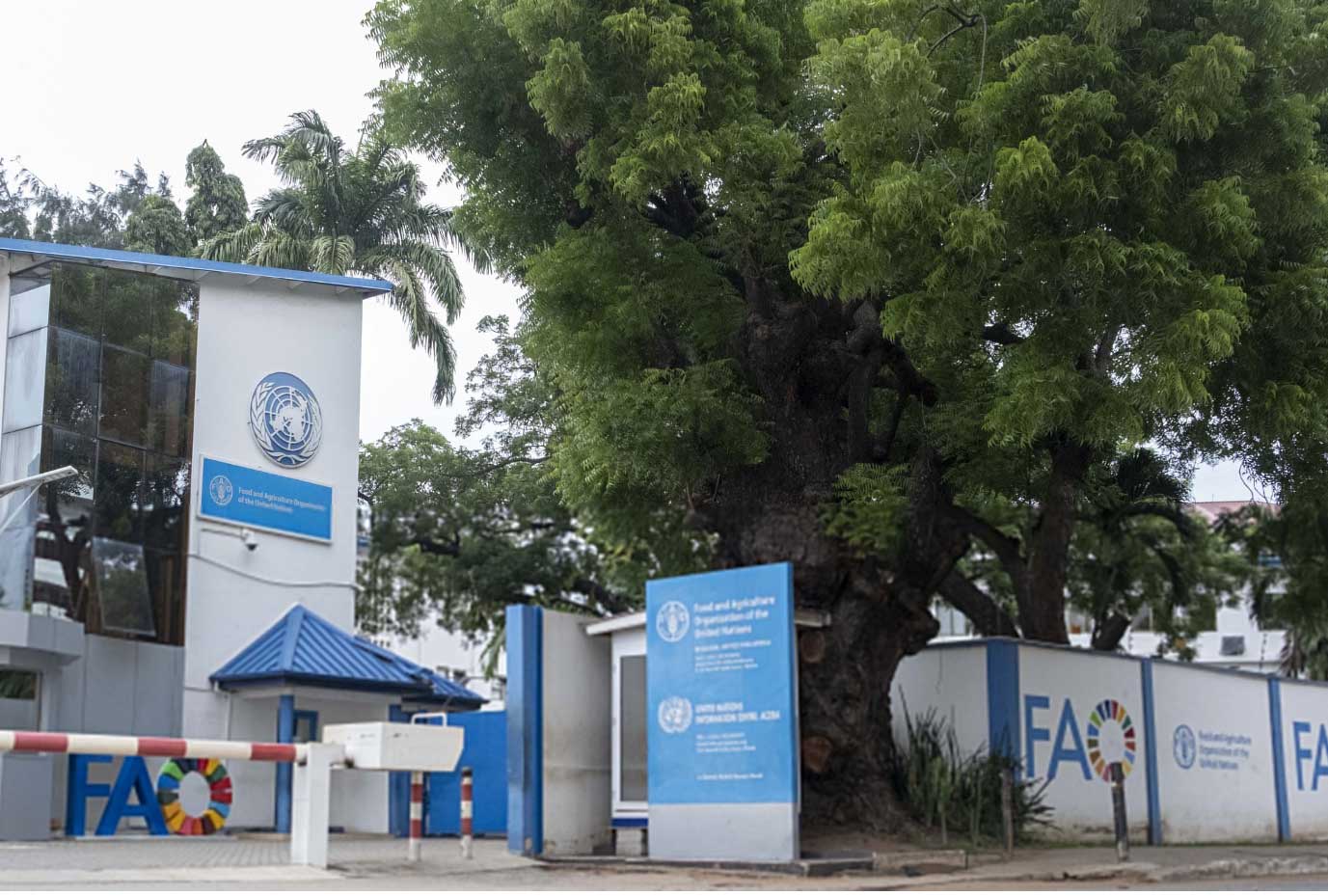
The Food and Agriculture Organization Ghana (FAO) plays a pivotal role in the nation’s journey towards food security, sustainable agriculture, and improved rural livelihoods. As a specialized UN agency, its work is deeply integrated with national policies, addressing everything from on-the-ground farmer support to high-level policy advice. This article provides a comprehensive overview of the FAO’s structure, strategic priorities, key projects, and overall impact on Ghana’s agrifood systems.
Ghana hosts a unique dual presence of the FAO, making Accra a significant hub for agricultural development across Africa. It’s essential to distinguish between the two entities:
This co-location concentrates immense technical expertise in Accra, facilitating high-level meetings and partnerships.
For stakeholders, here is a consolidated directory for the two main FAO offices in Accra:
| Feature | FAO Representation in Ghana (Country Office) | FAO Regional Office for Africa (RAF) |
|---|---|---|
| Physical Address | No. 69 Isert Road, North Ridge, Accra | 2 Gamel Abdul Nasser Road, Ridge, Accra |
| Mailing Address | P. O. Box GP 1628, Accra | P.O. Box GP 1628, Accra |
| Primary Phone | (+233) 302 610930 | (+233) 302 675000 |
| Primary Email | FAO-GH@fao.org | fao-ro-africa@fao.org |
The work of the FAO in Ghana is not arbitrary; it is guided by the Country Programming Framework (CPF) for 2023-2025. This core strategy aligns directly with Ghana’s national priorities, the Ministry of Food and Agriculture’s (MoFA) vision, and global goals like the SDGs. The CPF is built on three interlinked priorities:
This strategic focus ensures that local actions contribute to Ghana’s development agenda, the African Union’s Agenda 2063, and the FAO’s global “Four Betters” framework (Better Production, Better Nutrition, a Better Environment, and a Better Life).
The FAO’s project portfolio in Ghana is diverse, with a significant focus on the climate and food security vulnerabilities of the northern regions. Below is a summary of major active projects.
| Project Title | Timeline | Budget (USD) |
|---|---|---|
| EU Food Security Response in Northern Ghana | 2023-2026 | $10,744,024 |
| Strengthening Systems for Pandemic Preparedness | 2025-2028 | $4,283,877 |
| Strengthening Resilience in Northern Ghana (Climate) | 2025-2027 | $3,267,326 |
| Climate Resilience in Upper East Region | 2025-2026 | $1,072,194 |
| Support to Women Fonio Value Chain Actors | 2024-2025 | $65,000 |
The largest project, funded by the European Union with a €10 million budget, is a direct response to the food and fertilizer price crises affecting Northern Ghana. Its goal is to improve food security for 12,600 smallholder farming households across six districts. Key interventions include:
Beyond this flagship project, the FAO’s work covers several critical themes:
Ghana has been a major success story in reducing hunger, an achievement supported by decades of partnership with the FAO. However, a 2022 independent evaluation provided a nuanced view of the organization’s current role. While praising the FAO’s technical expertise and relevance, the evaluation highlighted the need to adapt its strategy for a lower-middle-income country (LMIC) by enhancing private sector engagement and strengthening government ownership of programs.
The future of the Food and Agriculture Organization Ghana (FAO) rests on its ability to evolve from a traditional aid provider to a catalytic partner. The key opportunities lie in unlocking private investment, scaling up digital agriculture, and continuing its targeted support for the nation’s most vulnerable regions. By embracing this strategic shift, the FAO can solidify its role as an indispensable partner in building a resilient, prosperous, and food-secure future for all Ghanaians.