Digital Banking Innovations in Ghana: Are Local Banks Adapting or Falling Behind?
Ghana’s financial landscape is undergoing a profound transformation, driven by rapid technological advancements and evolving customer expectations. This article delves into the state of digital banking in Ghana, examining the efforts of local banks to embrace these innovations and whether they are successfully adapting or struggling to keep pace with the swift digital tide.
The Digital Wave: Reshaping Ghana’s Financial Sector
Ghana has experienced an unprecedented surge in digital financial services, fueled by high mobile penetration rates and a growing, tech-savvy youth demographic. From the ubiquity of mobile money to the rise of sophisticated online payment gateways, the convenience and accessibility offered by digital platforms are fundamentally redefining how Ghanaians interact with their money. The central question for traditional financial institutions remains: how effectively are local banks navigating this seismic shift?
Key Takeaways:
- Mobile money continues to dominate Ghana’s digital financial landscape.
- Local banks are actively investing in digital channels but face intense competition from agile FinTech companies.
- Challenges for banks include legacy infrastructure, cybersecurity concerns, and consumer trust.
- Proactive adaptation and innovation are critical for local banks’ survival and growth in the evolving market.
What Exactly is Digital Banking in Ghana?
In the Ghanaian context, digital banking refers to the provision of a broad spectrum of banking services through electronic channels. These primarily include internet banking, mobile banking applications, Unstructured Supplementary Service Data (USSD) platforms, and increasingly, integration with the robust mobile money ecosystems. It signifies a move beyond traditional branch-based transactions, empowering customers to manage accounts, make payments, transfer funds, access credit, and even engage in investments directly from their digital devices, anytime and anywhere.
Local Banks’ Digital Journey: Adaptation Strategies
Many Ghanaian banks have unequivocally recognized the imperative to digitize their operations and service offerings. In response, they have made significant strides, with their adaptation strategies generally revolving around several key areas:
Mobile Banking Applications:
- Developing intuitive, feature-rich mobile applications for comprehensive account management, bill payments, and inter-bank or intra-bank transfers.
- Seamless integration with leading mobile money wallets (e.g., MTN Mobile Money, Vodafone Cash) to facilitate easy cash-in and cash-out.
- Incorporating advanced security features such as biometric authentication (fingerprint, facial recognition) for enhanced user protection.
- Offering instant loan facilities and investment product access directly through the app.
Internet Banking Platforms:
- Providing comprehensive online portals tailored for both retail and corporate clients, offering detailed transaction histories, e-statements, and bulk payment processing capabilities.
- Facilitating online loan applications, fixed deposit creation, and other investment vehicle subscriptions without the need for physical paperwork.
- Enabling international remittances and foreign exchange services through secure web interfaces.
USSD Banking:
- Maintaining and expanding USSD-based banking services to cater to customers who may not possess smartphones or consistent internet access.
- This foundational technology remains critical for driving financial inclusion, particularly in rural and semi-urban areas, allowing basic transactions like balance inquiries, transfers, and bill payments.
Agency Banking and Digital Kiosks:
- Establishing extensive networks of authorized agents who provide cash-in and cash-out services, facilitating last-mile access to banking for remote populations.
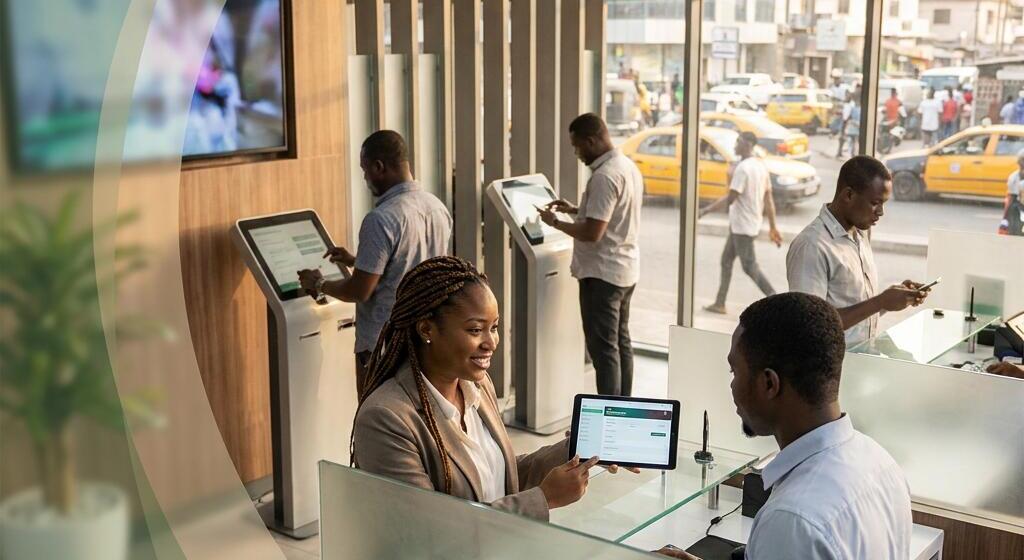
- Deploying automated digital kiosks and ATMs with enhanced functionalities (e.g., cardless withdrawals, utility payments) to offer self-service options and reduce branch traffic.
The Threat of Falling Behind: FinTechs and Mobile Money
Despite the considerable efforts of local banks, they face formidable competition, primarily from established mobile money operators (MMOs) and a growing cohort of nimble Financial Technology (FinTech) companies. This rivalry poses a significant threat to their market share and traditional revenue streams.
Mobile Money Dominance:
- Operators like MTN Mobile Money, Vodafone Cash, and AirtelTigo Money have cultivated deeply entrenched ecosystems, particularly among the unbanked and underbanked segments of the population.
- Their platforms are characterized by simplicity, widespread agent networks, and often lower transaction costs, which frequently outcompete traditional bank offerings for everyday micro-transactions and peer-to-peer payments.
- Mobile money has effectively leapfrogged traditional banking infrastructure for many Ghanaians.
Agility of FinTechs:
- A new wave of FinTech startups is innovating at an accelerated pace, focusing on niche markets such as micro-lending, automated savings, and accessible investment apps.
- These companies often deliver superior user experiences, faster onboarding processes, and highly specialized services that cater directly to specific consumer pain points.
- Unburdened by legacy systems, FinTechs possess greater flexibility and responsiveness to market demands, enabling quicker product development and deployment.
Obstacles and Opportunities in Ghana’s Digital Banking Evolution
The journey towards full digital integration for Ghanaian banks is fraught with both significant challenges and substantial opportunities for growth.
Challenges for Local Banks:
- Legacy Infrastructure: Many traditional banks operate on older core banking systems that are costly, complex, and difficult to integrate with modern digital platforms, hindering agility.
- Cybersecurity Concerns: The increased reliance on digital channels necessitates continuous, substantial investment in robust cybersecurity measures to protect customer data and financial transactions from evolving threats.
- Regulatory Compliance: Navigating a dynamic regulatory environment, which seeks to balance innovation with consumer protection and financial stability, adds layers of complexity to digital transformation.
- Digital Literacy and Trust: Bridging the digital literacy gap for certain segments of the population and building unwavering trust in digital channels remains a crucial hurdle.
- Intense Competition: The sheer number of players, both traditional and non-traditional, in the financial services sector intensifies the battle for customer acquisition and retention.
Opportunities for Growth:
- Collaboration with FinTechs: Strategic partnerships with FinTech startups can provide banks with access to cutting-edge technology, innovative solutions, and new market segments without needing to build everything in-house.
- Data Analytics and AI: Leveraging big data analytics and artificial intelligence can enable banks to offer highly personalized products, predictive services, and tailored financial advice, enhancing customer value.
- Deepening Financial Inclusion: Digital channels offer an unparalleled opportunity to reach underserved populations, bringing them into the formal financial system and expanding the customer base.
- Ecosystem Integration: Banks can position themselves as central players within broader digital payment ecosystems, connecting merchants, consumers, and other service providers.
Digital Banking Services: Local Banks vs. Mobile Money/FinTechs
| Feature | Local Banks (Typical Offering) | Mobile Money/FinTechs (Typical Offering) |
|---|---|---|
| Account Opening | Often requires branch visit, extensive Know Your Customer (KYC) documentation. | Fully digital onboarding, simpler KYC, faster account activation. |
| Fund Transfers | Bank-to-bank transfers, Mobile Money wallet transfers (via app). | Wallet-to-wallet transfers, often lower fees, instant and ubiquitous. |
| Bill Payments | Available via bank app/internet banking for various services. | Widely integrated, often direct utility/merchant payments, broader ecosystem. |
| Loan Access | Traditional credit assessment, longer approval times, larger loan amounts. | Micro-loans, often instant based on transaction history, smaller amounts. |
| Savings/Investments | Diverse products, often higher entry barriers for traditional instruments. | Micro-savings, easily accessible low-value investment platforms. |
| Reach/Agent Network | Branch network, growing agency banking points. | Extensive agent network, deeply penetrated across urban and rural areas. |
Charting the Future: Recommendations for Local Banks
To not only survive but thrive in Ghana’s rapidly evolving digital banking future, local banks must adopt a forward-thinking and multi-pronged approach:
- Embrace Open Banking: Actively develop and expose APIs to facilitate seamless integration with FinTechs, merchants, and other third-party service providers, fostering an innovation ecosystem.
- Invest in Modern Digital Infrastructure: Prioritize the modernization of core banking systems and constantly upgrade cybersecurity protocols to ensure scalability, resilience, and superior data protection.
- Prioritize Customer Experience (CX): Design and continuously refine intuitive, user-friendly, and personalized digital platforms that rival the best offerings from FinTech companies.
- Leverage Data-Driven Personalization: Utilize advanced analytics and AI to gain deeper insights into customer behavior, allowing for the proactive offering of tailored products and services, from micro-loans to personalized investment advice.
- Lead Digital Literacy Initiatives: Actively engage in educating customers on the benefits, functionalities, and security aspects of digital banking, fostering trust and accelerating adoption across all demographics.
- Forge Strategic Partnerships: Seek out and cultivate collaborations with telcos, FinTechs, and other technology providers to leverage their reach, innovation, and expertise, viewing them as strategic allies rather than sole competitors.
Frequently Asked Questions About Digital Banking in Ghana
- What is the biggest challenge for local banks in Ghana regarding digital transformation?
- Overcoming the limitations of legacy infrastructure, attracting and retaining tech talent, and competing effectively with the agile, customer-centric approaches of mobile money operators and FinTechs are major hurdles.
- Is digital banking safe in Ghana?
- Yes, regulated financial institutions in Ghana invest heavily in state-of-the-art cybersecurity measures to protect customer data and transactions. Users are also encouraged to practice good digital hygiene, such as using strong, unique passwords and enabling two-factor authentication.
- How does mobile money fit into digital banking in Ghana?
- Mobile money is a highly dominant form of digital financial service in Ghana and often serves as a primary entry point into the digital economy for many. Banks are increasingly integrating their platforms with mobile money services to offer seamless transfers between bank accounts and mobile wallets, enhancing convenience.
- Can I get a loan digitally from a Ghanaian bank?
- Yes, many local banks now offer fully digital loan application processes through their mobile banking apps or internet banking platforms. Some even provide instant micro-loans, leveraging internal credit scoring based on customer transaction history.
Conclusion: A Race for Relevance and Resilience
Ghana’s digital banking revolution is in full swing, presenting both immense opportunities for growth and significant threats to traditional banking models. While local banks have demonstrated a clear commitment to innovation, the relentless pace of change demanded by consumers and the competitive pressure from agile FinTechs and entrenched mobile money operators mean there is no room for complacency. Those banks that invest strategically in modern technology, prioritize an exceptional customer experience, foster collaboration over isolation, and effectively manage emerging risks will not only adapt but will emerge as leaders in this dynamic landscape. The question is no longer simply *if* they should adapt, but *how swiftly and strategically* they will evolve to secure their relevance and ensure their resilience in Ghana’s vibrant digital financial future.