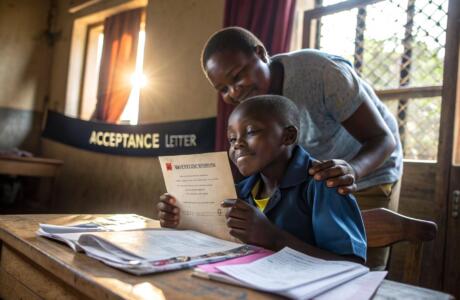
Ghana has a large, regulated university sector. As of early 2024 the Ghana Tertiary Education Commission (GTEC) listed 307 tertiary institutions, about half of them public, together enrolling roughly 635,000 students, with 85% in public institutions (Source: AACRAO EDGE, 2024). Universities split into public (heavily subsidised, from about GHS 2,400 a year) and private (fees from about GHS 6,000 to over GHS 130,000). Admission is based mainly on your WASSCE aggregate.
Updated January 2026. Published by websitesgh.com.
How many universities are in Ghana?
Ghana’s tertiary sector is one of the largest in West Africa. GTEC, the national regulator, listed 307 accredited tertiary institutions as of early 2024, roughly half public, enrolling about 635,000 students in total (Source: AACRAO EDGE, 2024). That figure covers universities, technical universities, colleges of education, nursing and midwifery colleges and specialised institutions. Among degree-awarding universities, the public system historically centres on nine funded universities, while more than 70 private universities and university colleges make up the rest (Source: Accra Street Journal, 2026).
Who regulates universities in Ghana?
The Ghana Tertiary Education Commission (GTEC) regulates the sector. It was created in 2020 under the Education Regulatory Bodies Act, 2020 (Act 1023), merging the former National Council for Tertiary Education and the National Accreditation Board into one body (Source: GTEC, 2026). GTEC handles institutional accreditation, programme accreditation, quality assurance and credentials evaluation. Before you enrol anywhere, confirm the institution and your specific programme are accredited on the GTEC website, because a degree from an unaccredited programme may not be recognised.
What is the difference between public and private universities?
Public universities are government-funded and therefore far cheaper for regular students, but they are highly competitive and enrol most of the country’s students. Private universities charge more and rely on tuition, but often offer smaller classes, flexible schedules and faster admission. We break this down fully in our guide to public vs private universities in Ghana. The nine established public funded universities are the University of Ghana (UG), Kwame Nkrumah University of Science and Technology (KNUST), University of Cape Coast (UCC), University of Education, Winneba (UEW), University for Development Studies (UDS), University of Mines and Technology (UMaT), University of Professional Studies, Accra (UPSA), University of Energy and Natural Resources (UENR) and University of Health and Allied Sciences (UHAS), with several newer public universities added since (Source: NCTE).
How much do universities in Ghana cost?
Public universities are subsidised. A comparative study put annual academic fees at roughly GHS 2,435 at UG and GHS 2,428 at KNUST for regular students, while Ashesi, the most expensive private university sampled, charged about GHS 133,703 a year (Source: FinexInsights, May 2025). Most private universities sit far lower, commonly GHS 6,000 to GHS 18,000 a year, with premium institutions like Lancaster University Ghana at GHS 40,000 to GHS 80,000 (Source: Pulse Ghana, 2026). See the full breakdown in our guide to university fees in Ghana.
Which are the best universities in Ghana?
The University of Ghana leads the national rankings. It retained its position as the top university in Ghana and West Africa in the QS World University Rankings 2026 and again in 2027, placing among Africa’s top 13 universities out of 1,504 assessed (Source: University of Ghana; Yen, 2026). KNUST ranks second nationally and is Ghana’s strongest for engineering, science and agriculture (Source: Pulse Ghana, June 2026). We rank and explain the field in our guide to the best universities in Ghana, and compare the top two directly in University of Ghana vs KNUST.
How do I get into a university in Ghana?
Admission is based mainly on your WASSCE aggregate. Applicants generally need credit passes in six subjects, three core (including English and Core Mathematics) and three relevant electives, and each programme sets a cut-off point that gets more competitive for courses like medicine, pharmacy and engineering (Source: University of Cape Coast admissions, 2026; AACRAO, 2024). You buy an e-voucher from a bank or Ghana Post, then apply online and choose up to three programmes. Our step-by-step guide to applying to university in Ghana walks through the whole process.
Can I study at a Ghanaian university by distance?
Yes. Several universities run large distance-learning arms, including the University of Cape Coast College of Distance Education, the KNUST Institute of Distance Learning and the University of Ghana’s distance programmes, with study centres across the regions and flexible payment plans (Source: UCC College of Distance Education; KNUST Institute of Distance Learning, 2026). See our guide to distance and online learning universities in Ghana.
Frequently asked questions
How many universities are there in Ghana?
GTEC listed 307 tertiary institutions in early 2024, about half public, enrolling around 635,000 students in total (Source: AACRAO EDGE, 2024). This includes universities, technical universities and colleges; degree-awarding private universities and colleges number over 70.
How do I check if a university in Ghana is accredited?
Check the institution and your specific programme on the GTEC website, which lists accredited, unaccredited and unrecognised institutions. University colleges operate under a mentoring chartered university until they earn their own charter (Source: Accra Street Journal, 2026).
Which is the best university in Ghana?
The University of Ghana, which topped the QS World University Rankings 2026 and 2027 for Ghana and West Africa (Source: University of Ghana; Yen, 2026). KNUST is second and leads in science and technology.
Are public universities cheaper than private ones?
Yes, substantially. Regular public university fees can be around GHS 2,400 a year, while private fees range from about GHS 6,000 to over GHS 130,000 depending on the institution and programme (Source: FinexInsights, 2025; Pulse Ghana, 2026).
Explore more education guides in our education and knowledge section, or find any school or service on websitesgh.com.